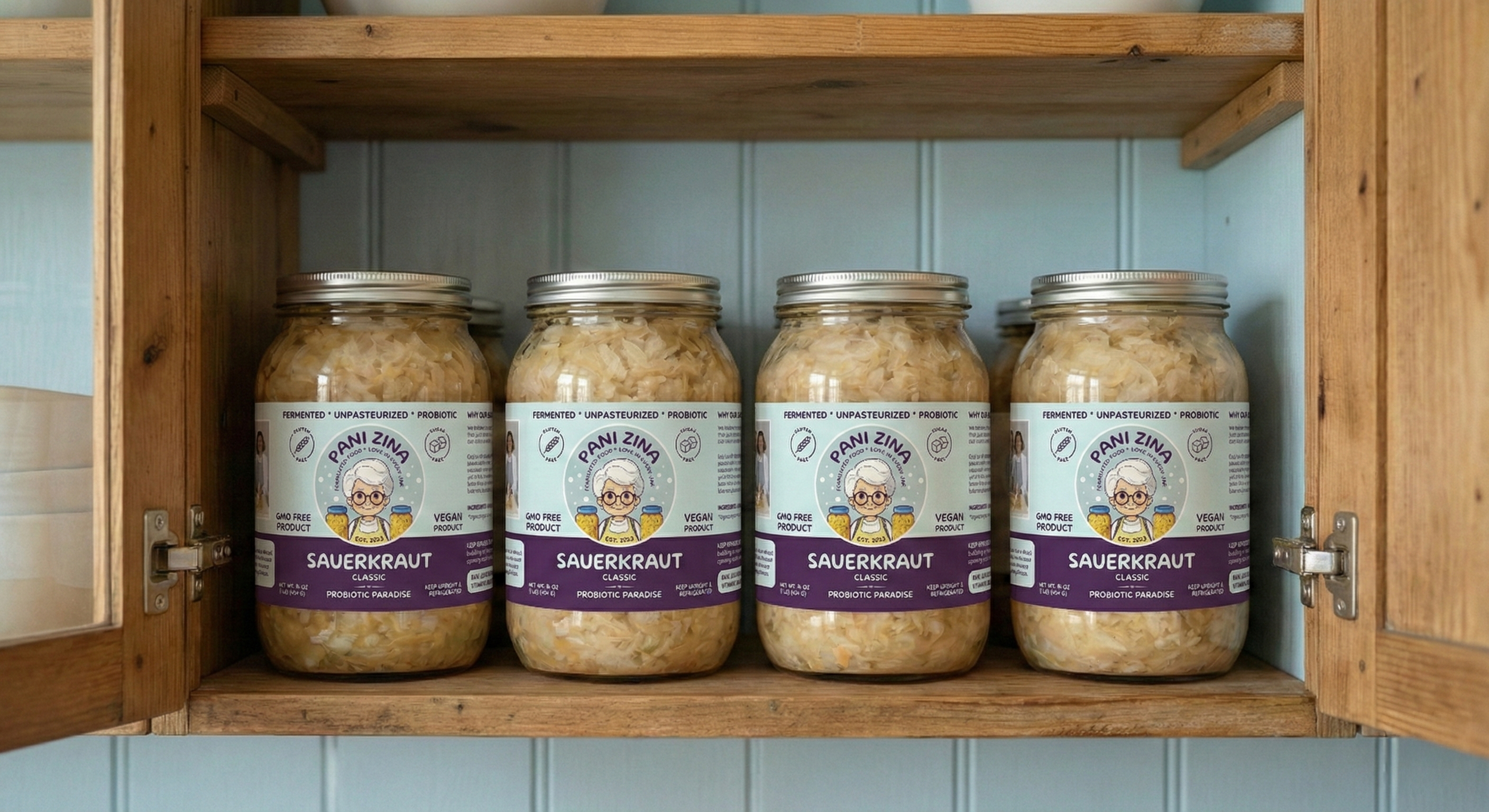
Sauerkraut With or Without Fermented Vegetables
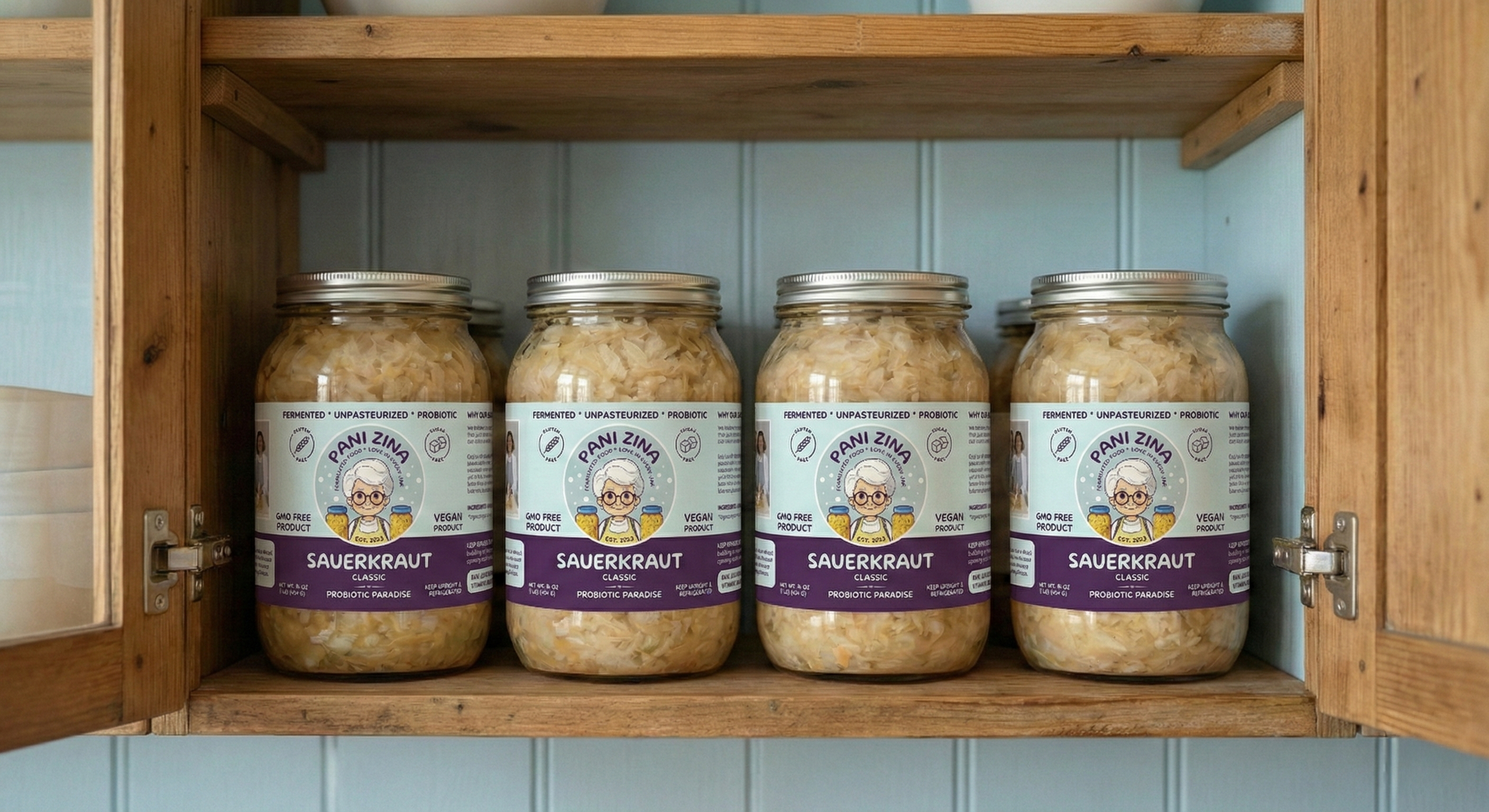
If you don’t feel like making it yourself, several small companies, like Pani Zina LLC, are producing “boutique” raw sauerkraut in small batches. Just make certain that the package states “Raw and unpasteurized” so you are assured that you’re getting live probiotic bacteria. Or you can make a small batch yourself with only two to three ingredients:
Ingredients
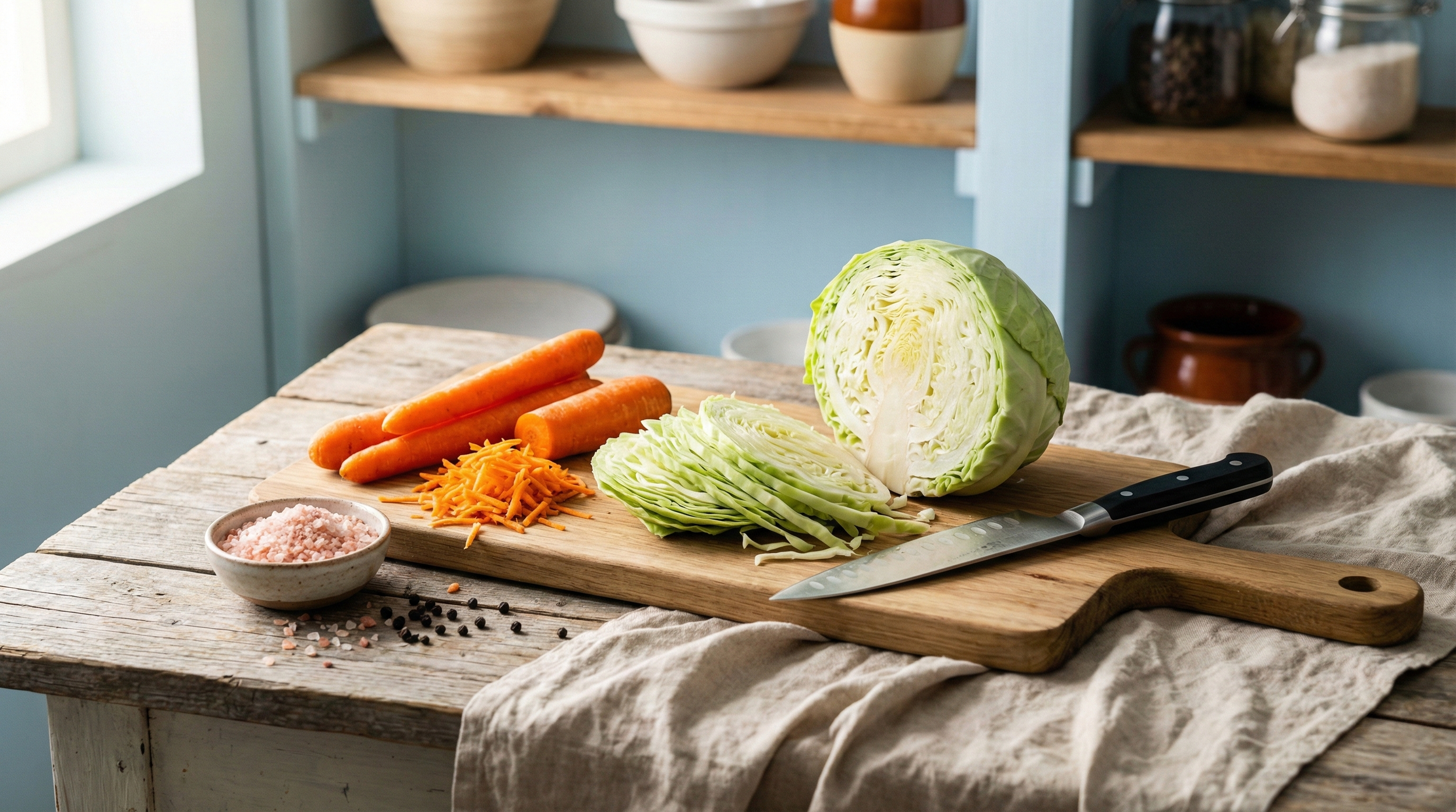
Cabbage: 1 medium head — 3 to 4 lbs.
Carrots: 3 carrots.
Salt: 11/2–2 tablespoons Himalayan Salt.
Peppercorns (optional): 10 peppercorns.
Tools
Large mixing bowl.
Large cooking pot (recommended for easier daily turning).
Plate that fits snugly inside the pot.
Weight such as 2-3 lbs. dumbbell plate or a heavy stone.
Instructions
Slice cabbage into ribbons and place in a large mixing bowl.
Grate carrots with the large grater; add to the mixing bowl.
Add salt; with time you will be able to adjust the salt amount to your liking.
Work salt into cabbage by squeezing and massaging it with your hands until it releases juice. This step is the most important for fermentation; it should take approximately 8-10 minutes.
Mix in the peppercorns; you can also crack them for more flavor.
(Optional Step): You can also add sliced radishes, carrots, beets, rutabaga, or other hard vegetables. Increase salt slightly to compensate for the added volume.

Place your mixture into the large cooking pot.
Cover with a plate face down, and put a weight on top of the plate. Using a cooking pot makes it easier to access the cabbage for daily maintenance.
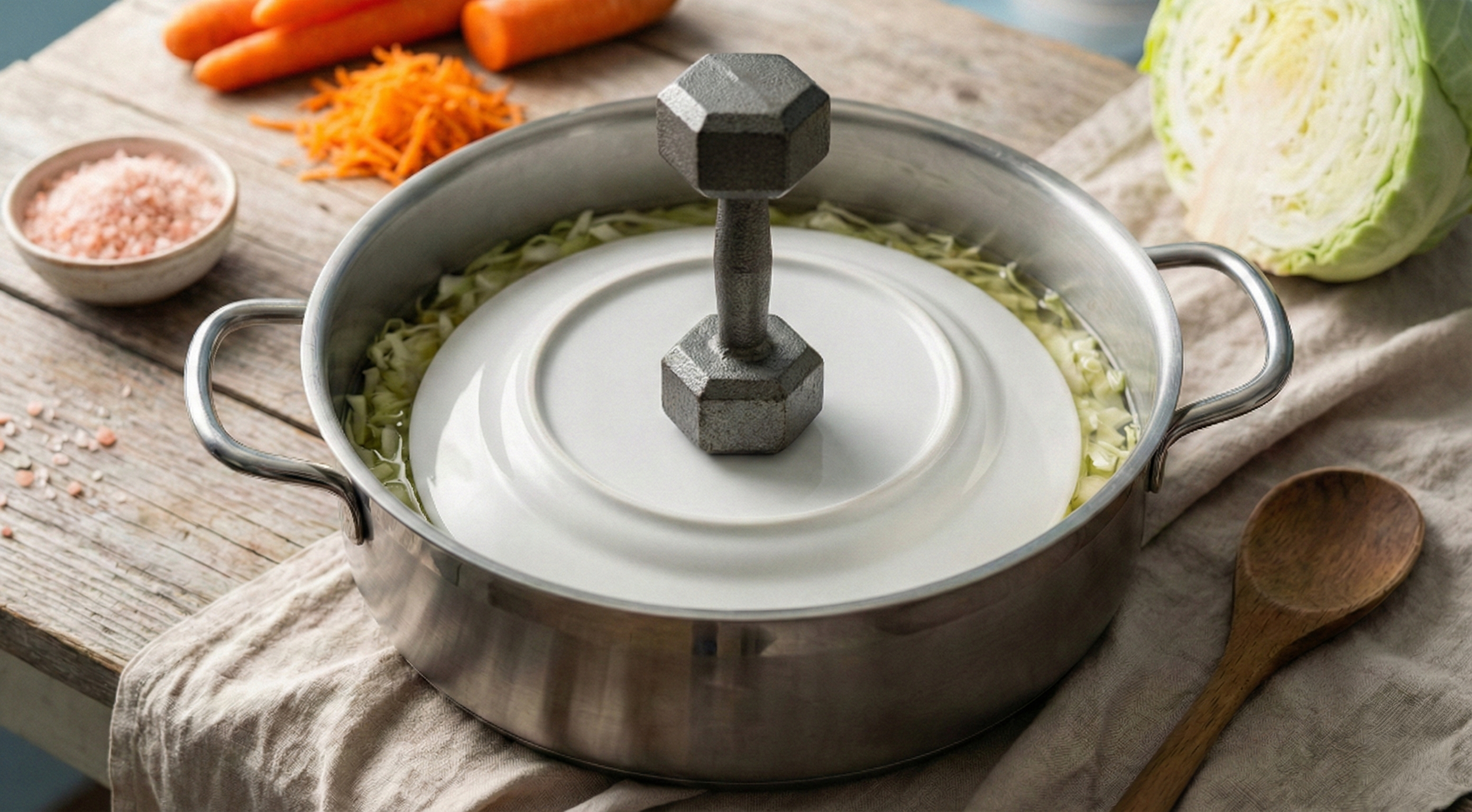
Daily Maintenance: Each day during the fermentation period, remove the weight and turn the cabbage over with a wooden spoon or clean hands. This helps release CO2 bubbles to ensure a better and crispier taste.
Ferment cabbage for 4 days at room temperature (approximately 70°F or 21°C). If it is not ready after 4 days, let it ferment for another 1 to 2 days. Bubbles and foam rising to the top are absolutely normal signs that the process is working.
Transfer sauerkraut and juice into jars with lids and place in the refrigerator. It will continue to ferment and taste better with time; it can stay in the fridge for as long as two months.
Note: The fermented cabbage juice is a potent probiotic carrier—don’t pour it out! Use it as a salad dressing, but be mindful of the high sodium content.